
The Ice-Cream Factory: A Profitable Business Opportunity Full Business Plan
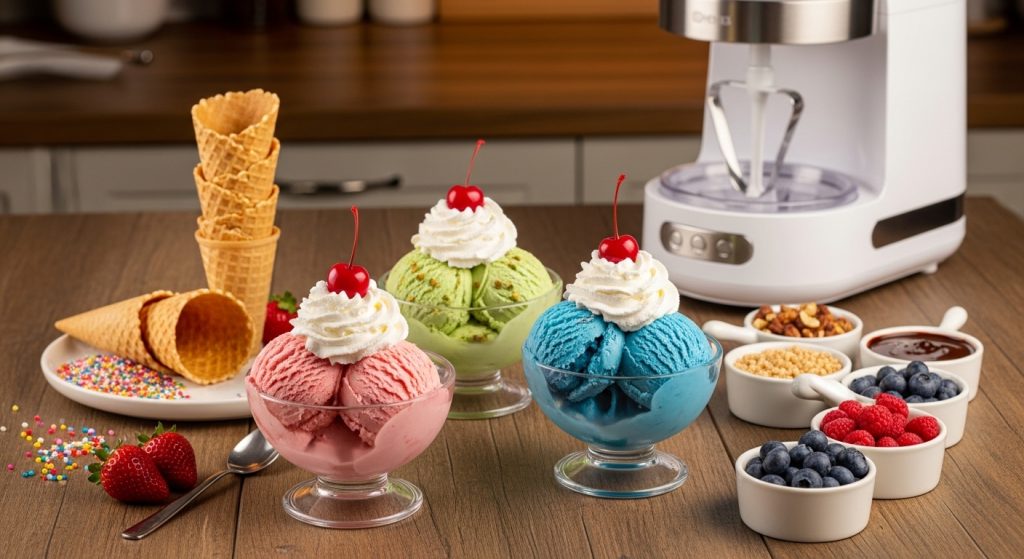
The ice-cream factory business is one of the most attractive and profitable ventures in the food manufacturing industry. Ice cream is a popular dessert enjoyed by people of all ages, making it a product with year-round demand and especially high sales during the summer season. With increasing urbanization, changing lifestyles, and growing consumer preferences for innovative flavors and premium frozen desserts, the ice-cream manufacturing industry offers excellent opportunities for entrepreneurs who want to establish a successful and scalable business. Whether producing traditional flavors such as vanilla, chocolate, and strawberry or introducing unique options like fruit-based, sugar-free, and premium gourmet ice creams, an ice-cream factory can generate substantial revenue while building a strong brand presence in the market.
Starting an ice-cream factory begins with conducting detailed market research to understand customer preferences, local competition, and emerging trends in the frozen dessert industry. Consumers today are increasingly interested in healthier alternatives, natural ingredients, and innovative flavors, creating opportunities for manufacturers to differentiate themselves. Identifying the target market is essential, whether the focus is on children, families, restaurants, hotels, supermarkets, or health-conscious consumers. A successful ice-cream factory should offer products that meet the needs of its target audience while maintaining competitive pricing and high quality. Entrepreneurs should also analyze existing brands and identify market gaps that can be filled with unique products and marketing strategies.
Selecting a suitable location is a crucial step in establishing an ice-cream manufacturing facility. The factory should be located in an area with good transportation access, reliable electricity, clean water supply, and sufficient space for production, storage, packaging, and distribution activities. Since ice cream requires strict temperature control, proper refrigeration and cold storage facilities are essential. The production area should comply with food safety and hygiene standards to ensure product quality and customer safety. A well-designed factory layout improves operational efficiency and reduces production costs by optimizing workflow.
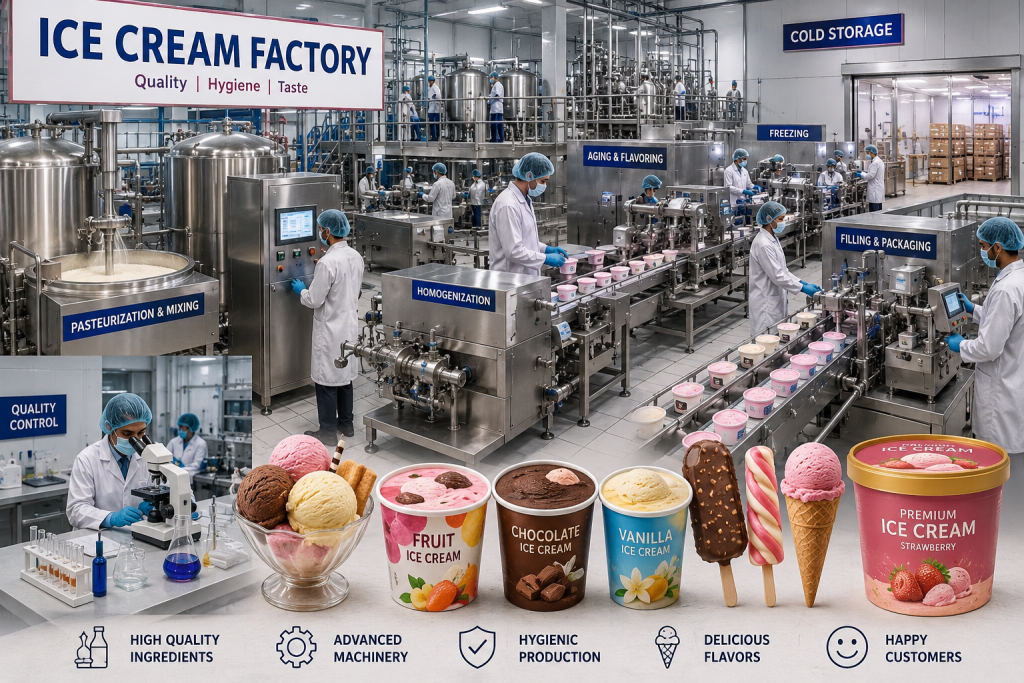
The manufacturing process involves several stages, including ingredient preparation, mixing, pasteurization, homogenization, aging, flavor addition, freezing, packaging, and storage. High-quality ingredients such as milk, cream, sugar, stabilizers, emulsifiers, fruits, nuts, and flavorings are required to produce premium ice cream. Modern machinery, including pasteurizers, homogenizers, batch freezers, continuous freezers, filling machines, and cold storage units, helps ensure consistency, efficiency, and product quality. Investing in advanced equipment can significantly increase production capacity and reduce labor costs over time.
Legal compliance is another important aspect of running an ice-cream factory. Business owners must obtain the necessary licenses and registrations required for food manufacturing operations. In India, obtaining an FSSAI license is mandatory for food production businesses. Additional requirements may include GST registration, trade licenses, factory licenses, and local regulatory approvals. Maintaining proper documentation, quality control systems, and hygiene standards helps build consumer trust and ensures compliance with government regulations.
Packaging plays a major role in the success of an ice-cream brand. Attractive and durable packaging not only protects the product but also enhances its appeal on store shelves. Packaging should clearly display product information such as ingredients, nutritional values, manufacturing date, expiry date, and storage instructions. Eye-catching designs, vibrant colors, and strong branding can influence purchasing decisions and help products stand out in a competitive market. Offering different package sizes, from individual cups to family packs, allows manufacturers to serve multiple customer segments effectively.
Marketing and distribution are critical for achieving business growth. Ice cream products can be distributed through supermarkets, grocery stores, convenience stores, restaurants, hotels, cafes, schools, and online delivery platforms. Establishing a strong distribution network ensures that products remain available and fresh in various markets. Digital marketing strategies such as social media advertising, influencer partnerships, online promotions, and customer loyalty programs can significantly increase brand awareness and sales. Seasonal promotions, free sampling campaigns, and participation in food festivals can also help attract new customers and strengthen brand recognition.
The investment required for a medium-scale ice-cream factory varies depending on production capacity, machinery, and location. Typically, entrepreneurs may need an investment ranging from ₹30 lakh to ₹1 crore or more for land, building, machinery, licenses, raw materials, packaging, and marketing. Despite the initial investment, the profit potential is considerable because ice cream generally offers attractive margins. Premium products, specialty flavors, and innovative offerings can further increase profitability. Effective cost management, efficient production processes, and strong marketing efforts contribute significantly to long-term success.
One of the key advantages of the ice-cream factory business is its scalability. Once a strong customer base and distribution network are established, manufacturers can expand by introducing new flavors, launching premium product lines, entering new geographic markets, or exporting products internationally. Additional product categories such as frozen yogurt, gelato, kulfi, ice-cream cakes, and dairy-based desserts can create new revenue streams and strengthen the brand portfolio.
In conclusion, the ice-cream factory business presents an exciting opportunity for entrepreneurs seeking a profitable venture in the food manufacturing industry. With proper planning, quality ingredients, efficient production systems, attractive branding, and effective marketing strategies, an ice-cream factory can become a successful and sustainable enterprise. The growing demand for frozen desserts, combined with innovation and customer-focused product development, ensures that this industry will continue to offer strong growth potential for years to come.
The Ice-Cream Factory: Complete Business Plan
Executive Summary
The Ice-Cream Factory is a medium-scale food manufacturing business focused on producing high-quality ice cream, frozen desserts, kulfi, ice-cream cakes, and specialty frozen products for retail, wholesale, and institutional customers. The business aims to capitalize on the growing demand for premium and affordable frozen desserts by offering delicious flavors, superior quality, hygienic production, and innovative packaging. The factory will serve supermarkets, grocery stores, restaurants, hotels, schools, event organizers, and online delivery platforms. The objective is to establish a recognized regional brand within three years and expand into multiple markets through strong distribution and marketing strategies.
Business Objectives
The primary objective of the business is to manufacture and distribute high-quality ice cream products while maintaining profitability and customer satisfaction. The company aims to achieve annual sales growth of 20% to 30%, build a strong distribution network, develop a trusted brand image, and continuously introduce new products to meet changing consumer preferences. Long-term goals include expanding production capacity, launching franchise outlets, and exporting products to international markets.
Market Analysis
The global and Indian ice-cream markets continue to grow due to increasing disposable incomes, urbanization, and consumer demand for convenient desserts. Ice cream is consumed by people of all age groups, making it a mass-market product with broad appeal. The target market includes children, teenagers, families, working professionals, restaurants, hotels, cafes, caterers, and institutional buyers. Growing interest in premium, organic, sugar-free, and health-conscious frozen desserts provides additional opportunities for innovation and market expansion.
The business will compete with established brands while differentiating itself through superior taste, affordable pricing, unique flavors, attractive packaging, and excellent customer service.
Products and Services
The Ice-Cream Factory will manufacture and market:
- Traditional ice cream flavors (Vanilla, Chocolate, Strawberry, Mango)
- Premium ice cream varieties
- Fruit-based ice creams
- Sugar-free ice cream
- Kulfi products
- Ice-cream cakes
- Family packs
- Single-serving cups
- Ice-cream bars and sticks
- Frozen yogurt
- Seasonal special flavors
Future product expansion may include dairy desserts, gelato, and specialty frozen products.
Production Process
The manufacturing process includes:
- Procurement of milk, cream, sugar, fruits, and flavoring ingredients.
- Mixing and blending ingredients according to product formulations.
- Pasteurization to eliminate harmful microorganisms.
- Homogenization for smooth texture.
- Aging of the mixture to improve consistency.
- Flavor addition and blending.
- Freezing and aeration.
- Filling and packaging.
- Cold storage and inventory management.
- Distribution to retailers and customers.
Strict quality control procedures will be implemented throughout the production process to ensure consistency and food safety.
Location and Infrastructure
The factory should be located in an industrial area with easy transportation access and a reliable electricity and water supply. A facility of approximately 5,000 to 10,000 square feet is suitable for a medium-scale operation.
Infrastructure requirements include:
- Production area
- Raw material storage section
- Cold storage facility
- Packaging department
- Quality control laboratory
- Administrative office
- Loading and unloading area
- Employee facilities
Machinery and Equipment
Required machinery includes:
- Milk storage tanks
- Pasteurizer
- Homogenizer
- Batch freezer
- Continuous freezer
- Mixing tanks
- Filling and sealing machines
- Cold storage units
- Refrigerated vehicles
- Quality testing equipment
Estimated machinery investment ranges from ₹20 lakh to ₹60 lakh, depending on production capacity.
Licenses and Legal Requirements
The business must obtain:
- FSSAI License
- GST Registration
- Trade License
- Factory License
- MSME Registration
- Fire Safety Certificate
- Pollution Control Board approvals (if applicable)
Compliance with food safety regulations is essential for business operations and brand reputation.
Marketing Strategy
The marketing strategy will focus on brand awareness, customer acquisition, and distribution expansion.
Offline Marketing
- Retail store partnerships
- Supermarket placement
- Product sampling campaigns
- Food exhibitions and trade fairs
- Local advertising
Online Marketing
- Social media marketing
- Influencer collaborations
- Website and e-commerce sales
- Online food delivery partnerships
- Digital advertising campaigns
Promotional offers, loyalty programs, and seasonal campaigns will help increase customer retention and sales.
Distribution Strategy
Products will be distributed through:
- Grocery stores
- Supermarkets
- Restaurants
- Hotels
- Cafes
- Ice-cream parlors
- School and college canteens
- Online delivery platforms
- Wholesale distributors
A refrigerated logistics system will ensure product quality during transportation.
Human Resource Requirements
A medium-scale ice-cream factory may require:
- Factory Manager
- Production Supervisor
- Quality Control Officer
- Machine Operators
- Packaging Staff
- Sales Representatives
- Delivery Personnel
- Administrative Staff
Employee training programs will focus on hygiene, food safety, and operational efficiency.
Financial Plan
Estimated Initial Investment
- Land and Building: ₹15 lakh to ₹40 lakh
- Machinery and Equipment: ₹20 lakh to ₹60 lakh
- Cold Storage Setup: ₹10 lakh to ₹25 lakh
- Licenses and Registration: ₹1 lakh to ₹3 lakh
- Raw Materials: ₹5 lakh to ₹10 lakh
- Packaging Materials: ₹2 lakh to ₹5 lakh
- Marketing and Promotion: ₹3 lakh to ₹10 lakh
- Working Capital: ₹10 lakh to ₹20 lakh
Total Estimated Investment
₹66 lakh to ₹1.73 crore
Revenue Potential
A medium-scale factory producing 2,000 to 5,000 liters per day can generate annual revenues ranging from ₹1.5 crore to ₹5 crore depending on market reach and product pricing.
Profit Margin
Typical net profit margins range from 15% to 30%, with premium products offering even higher profitability.
Risk Management
Potential risks include:
- Seasonal demand fluctuations
- Rising raw material costs
- Equipment breakdowns
- Increased competition
- Cold-chain failures
Risk mitigation strategies include product diversification, preventive maintenance, multiple supplier partnerships, and strong inventory management.
Growth and Expansion Plan
Future expansion opportunities include:
- Launching premium product lines
- Opening branded ice-cream parlors
- Franchise development
- Expansion into neighboring states
- Exporting products
- Introducing frozen dessert innovations
- Developing direct-to-consumer online sales channels
Conclusion
The Ice-Cream Factory represents a profitable and scalable business opportunity in the food manufacturing industry. By focusing on product quality, innovative flavors, efficient production systems, effective marketing, and strong distribution networks, the business can achieve sustainable growth and establish itself as a trusted brand in the frozen dessert market. With increasing consumer demand and expansion opportunities, the ice-cream manufacturing industry offers excellent long-term potential for entrepreneurs and investors.
Read more :