Medium-Scale Business

How to Start The Best Soap Manufacturing Business?

How to Start a Soap Manufacturing Business: Complete Business Plan
Introduction

Soap manufacturing is one of the most profitable and evergreen businesses in the consumer goods industry. Soap is an essential household product used daily by people of all ages, ensuring continuous market demand throughout the year. With increasing awareness of personal hygiene, cleanliness, skincare, and health, the demand for quality soaps has grown significantly in both urban and rural markets. Entrepreneurs can establish a successful medium-scale soap manufacturing business by producing bathing soaps, herbal soaps, medicated soaps, beauty soaps, glycerin soaps, and laundry soaps. With proper planning, quality production, attractive packaging, and effective marketing, a soap manufacturing business can generate substantial profits and long-term growth.

Business Opportunity and Market Potential

The soap industry is one of the largest segments of the fast-moving consumer goods (FMCG) sector. Every household, hotel, hospital, school, and commercial establishment requires soap products regularly. Rising consumer interest in herbal, organic, Ayurvedic, and chemical-free soaps has created new opportunities for manufacturers. A medium-scale soap manufacturing business can cater to local, regional, and national markets while building a unique brand identity. The growing popularity of natural skincare products offers excellent potential for entrepreneurs to enter specialized niche markets and command higher profit margins.

Market Research and Product Selection

Before launching the business, thorough market research should be conducted to understand customer preferences, competitor products, pricing strategies, and emerging trends. Entrepreneurs should identify specific market segments and select products that meet consumer demand. Popular product categories include bathing soaps, herbal soaps, beauty soaps, antibacterial soaps, glycerin soaps, baby soaps, medicated soaps, and laundry soaps. Initially, focusing on two or three product categories can help simplify operations and establish a strong market presence before expanding the product range.

Business Model

The soap manufacturing business can operate through multiple revenue channels. Manufacturers can sell products under their own brand, produce soaps for private-label companies, undertake contract manufacturing for established brands, or supply products directly to wholesalers and distributors. Building an independent brand is often the most profitable long-term strategy because it creates customer loyalty and allows greater control over pricing and marketing.

Location and Infrastructure Requirements

A medium-scale soap manufacturing unit requires adequate space for production, raw material storage, packaging, finished goods storage, quality testing, and administration. A facility ranging from 3,000 to 8,000 square feet is generally sufficient for medium-scale operations. The location should provide easy transportation access, reliable electricity, water supply, and compliance with industrial regulations. Proper ventilation, drainage systems, and safety measures should be installed to maintain a safe and efficient working environment.

Raw Materials Required

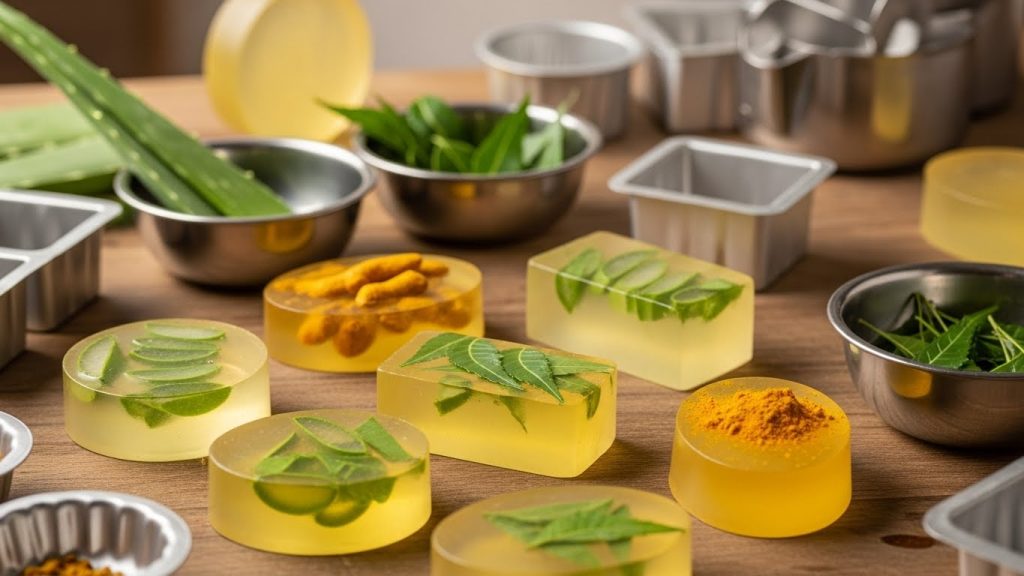
The quality of soap largely depends on the quality of raw materials used during production. Common raw materials include vegetable oils, palm oil, coconut oil, caustic soda, glycerin, fragrances, essential oils, herbal extracts, colorants, preservatives, and packaging materials. Manufacturers producing herbal or premium soaps may also use ingredients such as aloe vera, neem, sandalwood, turmeric, charcoal, honey, and milk extracts. Establishing reliable supplier relationships helps ensure consistent quality and stable pricing.

Manufacturing Process

The soap manufacturing process begins with the mixing of oils and alkali through a process called saponification. The resulting soap base is blended with fragrances, colors, herbal extracts, and other additives according to the desired product formulation. The mixture is then poured into molds or processed through soap plodders and extrusion machines to create bars of the required size and shape. After molding, the soap is cured, dried, cut, stamped, and packaged. Quality control procedures should be implemented throughout the process to ensure consistency, safety, and customer satisfaction.

Machinery and Equipment

A medium-scale soap manufacturing business requires machinery such as oil storage tanks, saponification kettles, mixers, plodders, soap cutting machines, stamping machines, conveyors, packaging machines, and quality testing equipment. Automated and semi-automated production systems can significantly improve productivity and reduce labor costs. The machinery investment depends on production capacity and product variety.

Licenses and Legal Requirements

To operate legally, entrepreneurs must obtain the necessary registrations and licenses. These typically include business registration, GST registration, factory license, trade license, MSME registration, pollution control approvals, fire safety certification, and other local regulatory permissions. Compliance with manufacturing standards and labor regulations is essential for smooth business operations and long-term sustainability.

Branding and Packaging Strategy

Branding is one of the most important factors in the success of a soap manufacturing business. A memorable brand name, attractive logo, and professional packaging can help products stand out in a competitive marketplace. Packaging should clearly display ingredients, manufacturing date, expiry date, usage instructions, and product benefits. Eco-friendly and premium packaging can further enhance customer appeal and strengthen brand positioning.

Marketing and Sales Strategy

A strong marketing strategy is essential to build brand awareness and increase sales. Products can be promoted through retail stores, supermarkets, pharmacies, beauty stores, wholesalers, distributors, and online marketplaces. Digital marketing through social media platforms, search engine optimization, influencer partnerships, and paid advertising can significantly increase brand visibility. Offering free samples, introductory discounts, and promotional campaigns can encourage customers to try new products and build long-term loyalty.

Human Resource Requirements

A medium-scale soap manufacturing business typically requires a production manager, machine operators, quality control personnel, packaging workers, sales representatives, warehouse staff, and administrative employees. Proper employee training helps improve productivity, maintain product quality, and ensure workplace safety.

Investment and Financial Plan

The estimated investment for a medium-scale soap manufacturing business may range from ₹30 lakh to ₹1 crore depending on production capacity and automation level.

Estimated Startup Costs:
  • Land and Building: ₹10 lakh to ₹30 lakh
  • Machinery and Equipment: ₹15 lakh to ₹40 lakh
  • Raw Materials: ₹5 lakh to ₹15 lakh
  • Packaging Materials: ₹2 lakh to ₹5 lakh
  • Licenses and Registration: ₹1 lakh to ₹3 lakh
  • Marketing and Promotion: ₹3 lakh to ₹10 lakh
  • Working Capital: ₹5 lakh to ₹20 lakh
Total Estimated Investment:

₹30 lakh to ₹1 crore

Profit Potential

Soap manufacturing offers attractive profit margins because of consistent demand and repeat purchases. Depending on production efficiency, branding, and distribution strength, net profit margins typically range between 15% and 35%. Premium and herbal soap products often generate higher margins due to their perceived value and growing consumer demand.

Growth and Expansion Opportunities

Once the business establishes a strong customer base, expansion opportunities include launching new product lines, entering new markets, exporting products, opening exclusive brand outlets, and offering contract manufacturing services. Entrepreneurs can also introduce complementary personal care products such as shampoos, face washes, hand washes, body lotions, and skincare products to increase revenue and strengthen their brand portfolio.

Conclusion

Soap manufacturing is a highly profitable medium-scale business with strong market demand, repeat customers, and excellent growth potential. By focusing on product quality, innovative formulations, attractive branding, efficient production processes, and effective marketing strategies, entrepreneurs can build a successful and sustainable business. With proper planning and execution, a soap manufacturing company can grow into a recognized brand and achieve long-term profitability in the rapidly expanding personal care and hygiene industry.

Read more :

Start A Soap Business in 5 Basic Steps

How to Start The Best Coffee Shop Business?

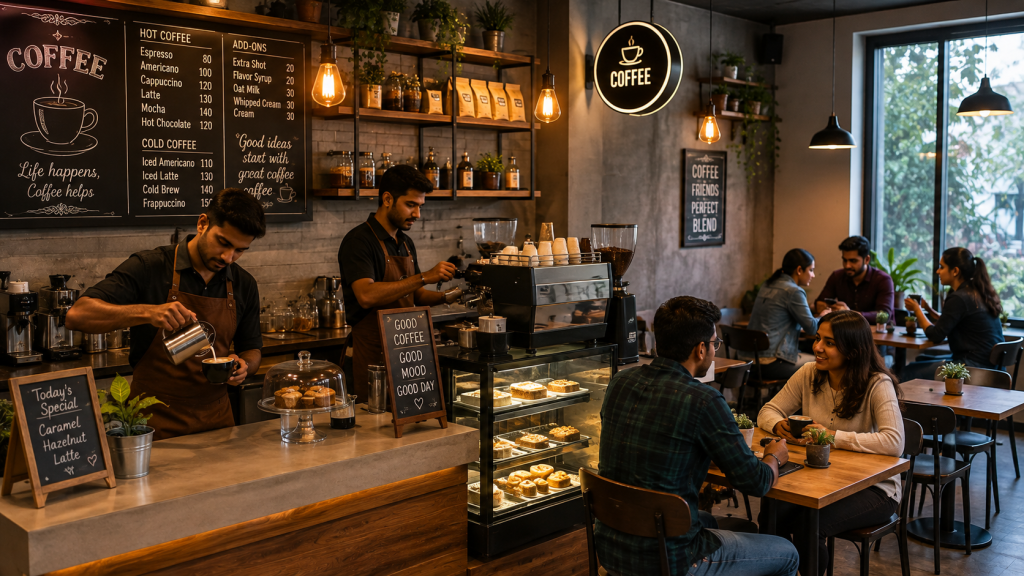
How to Start a Coffee Shop Business: Complete Guide for Beginners

The coffee shop business has become one of the most attractive opportunities for entrepreneurs in recent years. Coffee is no longer just a beverage; it has become a lifestyle choice, a social experience, and a part of modern work culture. With the increasing popularity of specialty coffee, café culture, remote working, and social gatherings, coffee shops are experiencing strong growth in many cities and towns. Whether you want to open a small neighborhood café or build a premium coffee brand, a coffee shop business offers excellent profit potential and long-term growth opportunities. With proper planning, quality products, and a customer-focused approach, a coffee shop can become a successful and sustainable venture.

Understanding the Coffee Shop Business

A coffee shop is a retail business that serves coffee, tea, beverages, snacks, and light meals to customers. Modern coffee shops provide more than drinks; they offer a comfortable environment where people can work, study, meet friends, or relax. Many successful coffee shops generate revenue not only from coffee sales but also from sandwiches, pastries, desserts, and specialty beverages. Before starting the business, it is important to understand local customer preferences, competition, and market demand. Researching successful coffee shops in your area can help you identify opportunities and create a unique business concept.

Conducting Market Research

Market research is one of the most important steps before launching a coffee shop. Study the local market and identify customer preferences, spending habits, and popular beverage choices. Analyze competitors to understand their pricing, menu offerings, and customer service standards. Determine whether your area can support a premium coffee shop, a budget-friendly café, or a specialty coffee concept. Understanding your target market helps create a business model that meets customer expectations and stands out from competitors.

Choosing the Right Location

The success of a coffee shop depends heavily on its location. High-traffic areas such as shopping centers, business districts, educational institutions, commercial complexes, and residential neighborhoods are ideal locations. Customers prefer coffee shops that are easily accessible and offer a comfortable atmosphere. Visibility, parking availability, and foot traffic should be carefully evaluated before selecting a location. Even a small coffee shop can generate strong sales if it is located in the right area.

Creating a Business Plan

A well-prepared business plan serves as a roadmap for your coffee shop. The plan should include business objectives, target audience, startup costs, revenue projections, marketing strategies, and operational procedures. Decide whether you want to operate as an independent café or purchase a franchise. Define your unique selling proposition, such as specialty coffee, organic ingredients, premium desserts, or a cozy work-friendly environment. A clear business plan also helps secure financing from banks or investors if needed.

Investment and Startup Costs

The investment required for a coffee shop varies depending on size, location, and concept. A small coffee shop may require an investment of ₹5 lakh to ₹15 lakh, while a premium café may require ₹20 lakh to ₹1 crore or more. Major expenses include rent, interior design, furniture, coffee machines, grinders, refrigeration equipment, kitchen appliances, licenses, raw materials, staff salaries, and marketing. Investing in high-quality coffee-making equipment is essential because product quality directly affects customer satisfaction and repeat business.

Equipment and Raw Materials

A coffee shop requires several important pieces of equipment, including espresso machines, coffee grinders, blenders, refrigerators, display counters, ovens, and point-of-sale systems. High-quality coffee beans, milk, syrups, chocolate, sugar, and bakery ingredients form the foundation of your menu. Building relationships with reliable suppliers ensures consistent quality and competitive pricing. Fresh ingredients and premium coffee beans can help establish a strong reputation in the market.

Designing the Menu

The menu should include a variety of beverages and food items to attract different customer segments. Popular options include espresso, cappuccino, latte, mocha, cold coffee, iced beverages, hot chocolate, tea, sandwiches, pastries, muffins, cookies, and cakes. Offering seasonal beverages and unique signature drinks can differentiate your coffee shop from competitors. Pricing should balance affordability with profitability while reflecting the quality of your products and customer experience.

Marketing and Brand Building

Effective marketing is crucial for attracting customers and building a recognizable brand. Create a memorable business name, professional logo, and attractive interior design. Social media platforms such as Instagram and Facebook are powerful tools for showcasing products, promoting special offers, and engaging with customers. High-quality photographs, customer testimonials, and behind-the-scenes content can increase brand visibility. Offering loyalty programs, student discounts, and special promotions can encourage repeat visits. Collaborating with local influencers and hosting events can further strengthen your brand presence.

Managing Daily Operations

Efficient operations are essential for maintaining profitability and customer satisfaction. Staff should be trained in coffee preparation, customer service, hygiene, and inventory management. Daily tasks include preparing beverages, maintaining cleanliness, monitoring stock levels, handling customer orders, and managing finances. Consistency in taste and service quality is critical for customer retention. Using modern billing and inventory systems can improve efficiency and reduce waste.

Profit Potential and Growth Opportunities

A successful coffee shop can generate substantial profits due to the high margins on coffee beverages. While the cost of ingredients is relatively low, customers are willing to pay premium prices for quality coffee and a pleasant experience. As the business grows, opportunities include expanding the menu, opening additional locations, introducing delivery services, selling packaged coffee products, and launching a franchise model. Developing a strong brand can transform a single coffee shop into a regional or national chain.

Challenges and Success Tips

Like any business, coffee shops face challenges such as competition, changing consumer preferences, rising ingredient costs, and staffing issues. Success depends on maintaining quality, providing excellent customer service, controlling expenses, and continuously innovating. Listening to customer feedback, updating the menu, and creating a welcoming atmosphere can help build customer loyalty. Entrepreneurs who focus on delivering a memorable experience often achieve long-term success.

Coffee Shop Full Business Plan

Executive Summary

A coffee shop business is a profitable food and beverage venture that serves coffee, specialty beverages, snacks, desserts, and light meals in a comfortable environment. The growing coffee culture among students, professionals, entrepreneurs, and young consumers has created significant opportunities for new coffee shop owners. The objective of this business is to provide high-quality coffee, excellent customer service, and a relaxing atmosphere while generating sustainable profits and building a recognizable brand.

Business Overview

The coffee shop will offer a variety of hot and cold beverages, including espresso, cappuccino, latte, mocha, americano, cold coffee, iced coffee, tea, hot chocolate, milkshakes, and smoothies. Additional products such as sandwiches, pastries, cakes, cookies, muffins, and snacks will increase customer spending and profitability.

Business Objectives

  • Establish a successful coffee shop within the first year.
  • Build a loyal customer base.
  • Achieve monthly profitability within six months.
  • Develop a strong local brand.
  • Expand to multiple locations within five years.

Market Analysis

Industry Overview

The coffee industry continues to grow due to changing lifestyles, increasing urbanization, work-from-café culture, and rising demand for specialty beverages. Coffee shops are no longer just places to drink coffee; they have become social and professional meeting spaces.

Target Market

  • College students
  • Office employees
  • Entrepreneurs
  • Freelancers
  • Remote workers
  • Young professionals
  • Families
  • Tourists
  • Coffee enthusiasts

Customer Preferences

Customers generally seek:

  • Quality coffee
  • Comfortable seating
  • Free Wi-Fi
  • Attractive interiors
  • Friendly service
  • Affordable pricing
  • Fresh food options

Business Model

Revenue Sources

  1. Coffee and beverages
  2. Snacks and desserts
  3. Takeaway orders
  4. Online delivery
  5. Corporate orders
  6. Event catering
  7. Coffee bean sales
  8. Merchandise sales

Unique Selling Proposition (USP)

  • Premium-quality coffee beans
  • Freshly prepared food
  • Modern and comfortable ambiance
  • Fast service
  • Consistent product quality
  • Affordable premium experience

Location Strategy

Choosing the right location is critical.

Ideal Locations

  • Shopping malls
  • Business districts
  • College areas
  • High-street markets
  • Residential neighborhoods
  • Tourist locations
  • Commercial complexes

Location Requirements

  • High foot traffic
  • Easy accessibility
  • Parking availability
  • Good visibility
  • Safe environment

Startup Cost Estimate

Initial Investment

ItemEstimated Cost (₹)
Shop Security Deposit3,00,000
Interior Design & Furniture5,00,000
Coffee Machines3,50,000
Refrigeration Equipment1,00,000
Kitchen Equipment1,50,000
POS System50,000
Licenses & Permits50,000
Branding & Marketing1,00,000
Initial Inventory1,00,000
Working Capital3,00,000
Total Investment20,00,000

A small coffee kiosk can start with ₹5 lakh to ₹10 lakh, while a premium café may require ₹20 lakh to ₹1 crore or more.

Products and Services

Coffee Menu

  • Espresso
  • Cappuccino
  • Latte
  • Mocha
  • Americano
  • Macchiato
  • Flat White
  • Cold Coffee
  • Iced Latte
  • Frappes

Additional Beverages

  • Tea
  • Green Tea
  • Hot Chocolate
  • Smoothies
  • Milkshakes
  • Fresh Juices

Food Menu

  • Sandwiches
  • Burgers
  • Pastries
  • Cakes
  • Cookies
  • Muffins
  • Garlic Bread
  • Wraps
  • Brownies

Revenue Projection

Daily Sales Example

Product CategoryDaily Revenue (₹)
Coffee & Beverages10,000
Snacks & Food5,000
Takeaway Orders2,000
Total Daily Revenue17,000

Monthly Revenue

₹17,000 × 30 days = ₹5,10,000

Monthly Operating Expenses

ExpenseAmount (₹)
Rent75,000
Salaries1,00,000
Raw Materials80,000
Electricity & Utilities25,000
Marketing20,000
Maintenance10,000
Miscellaneous20,000
Total Expenses3,30,000

Profit Projection

Monthly Revenue

₹5,10,000

Monthly Expenses

₹3,30,000

Estimated Monthly Profit

₹1,80,000

Profit margins typically range from 25% to 40%, depending on location, pricing, and operational efficiency.

Marketing Strategy

Offline Marketing

  • Grand opening promotions
  • Student discounts
  • Loyalty cards
  • Referral programs
  • Community events
  • Local partnerships

Digital Marketing

  • Social media marketing
  • Food photography
  • Customer reviews
  • Influencer collaborations
  • Local search optimization
  • Online advertisements

Branding Activities

  • Unique logo
  • Professional menu design
  • Branded packaging
  • Signature coffee recipes
  • Consistent customer experience

Operations Plan

Daily Activities

  1. Open and prepare equipment.
  2. Receive and check inventory.
  3. Prepare beverages and food.
  4. Serve customers efficiently.
  5. Maintain cleanliness.
  6. Monitor inventory levels.
  7. Record daily sales.

Inventory Management

Maintain stock of:

  • Coffee beans
  • Milk
  • Syrups
  • Sugar
  • Chocolate
  • Bakery ingredients
  • Packaging materials

Staffing Requirements

Initial Team

  • Owner/Manager
  • Head Barista
  • Assistant Barista
  • Kitchen Assistant
  • Cashier
  • Cleaner

Expanded Team

  • Shift Managers
  • Additional Baristas
  • Delivery Staff
  • Marketing Executive

Risk Analysis

Business Risks

  • High competition
  • Rising ingredient costs
  • Economic downturns
  • Staffing issues
  • Customer preference changes

Risk Management

  • Focus on quality
  • Regular menu updates
  • Strong customer service
  • Cost control measures
  • Customer loyalty programs

Growth Opportunities

Year 1

Establish profitable operations.

Year 2

Launch online ordering and delivery.

Year 3

Open a second outlet.

Year 4

Develop a regional coffee brand.

Year 5

Launch franchise opportunities and packaged coffee products.

Long-Term Expansion

Future growth opportunities include:

  • Coffee bean roasting business
  • Packaged coffee sales
  • Mobile coffee trucks
  • Corporate coffee services
  • Franchise development
  • National café chain expansion

Conclusion

A coffee shop business offers excellent profit potential, strong customer demand, and long-term growth opportunities. With the right location, quality products, professional management, and effective marketing, entrepreneurs can build a successful coffee brand. By focusing on customer experience and operational excellence, a coffee shop can evolve from a single outlet into a highly profitable multi-location business.

Read more :

Starting a Coffee Shop Business | Top Guide

How To Start The Best Ice-Cream Business?

The Ice-Cream Factory: A Profitable Business Opportunity Full Business Plan

The ice-cream factory business is one of the most attractive and profitable ventures in the food manufacturing industry. Ice cream is a popular dessert enjoyed by people of all ages, making it a product with year-round demand and especially high sales during the summer season. With increasing urbanization, changing lifestyles, and growing consumer preferences for innovative flavors and premium frozen desserts, the ice-cream manufacturing industry offers excellent opportunities for entrepreneurs who want to establish a successful and scalable business. Whether producing traditional flavors such as vanilla, chocolate, and strawberry or introducing unique options like fruit-based, sugar-free, and premium gourmet ice creams, an ice-cream factory can generate substantial revenue while building a strong brand presence in the market.

Starting an ice-cream factory begins with conducting detailed market research to understand customer preferences, local competition, and emerging trends in the frozen dessert industry. Consumers today are increasingly interested in healthier alternatives, natural ingredients, and innovative flavors, creating opportunities for manufacturers to differentiate themselves. Identifying the target market is essential, whether the focus is on children, families, restaurants, hotels, supermarkets, or health-conscious consumers. A successful ice-cream factory should offer products that meet the needs of its target audience while maintaining competitive pricing and high quality. Entrepreneurs should also analyze existing brands and identify market gaps that can be filled with unique products and marketing strategies.

Selecting a suitable location is a crucial step in establishing an ice-cream manufacturing facility. The factory should be located in an area with good transportation access, reliable electricity, clean water supply, and sufficient space for production, storage, packaging, and distribution activities. Since ice cream requires strict temperature control, proper refrigeration and cold storage facilities are essential. The production area should comply with food safety and hygiene standards to ensure product quality and customer safety. A well-designed factory layout improves operational efficiency and reduces production costs by optimizing workflow.

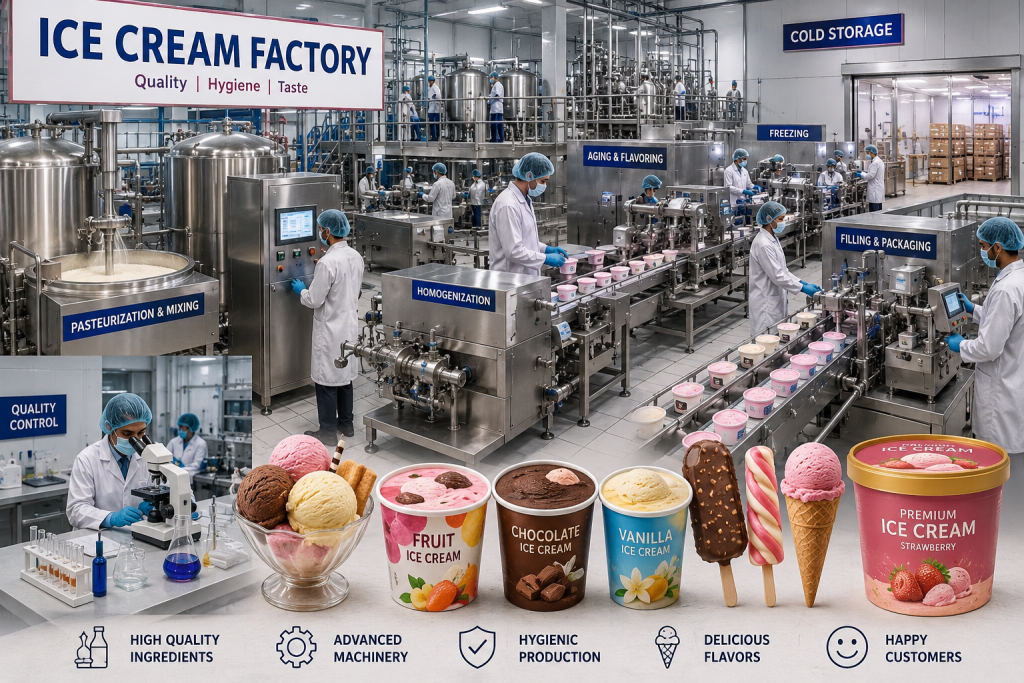
The manufacturing process involves several stages, including ingredient preparation, mixing, pasteurization, homogenization, aging, flavor addition, freezing, packaging, and storage. High-quality ingredients such as milk, cream, sugar, stabilizers, emulsifiers, fruits, nuts, and flavorings are required to produce premium ice cream. Modern machinery, including pasteurizers, homogenizers, batch freezers, continuous freezers, filling machines, and cold storage units, helps ensure consistency, efficiency, and product quality. Investing in advanced equipment can significantly increase production capacity and reduce labor costs over time.

Legal compliance is another important aspect of running an ice-cream factory. Business owners must obtain the necessary licenses and registrations required for food manufacturing operations. In India, obtaining an FSSAI license is mandatory for food production businesses. Additional requirements may include GST registration, trade licenses, factory licenses, and local regulatory approvals. Maintaining proper documentation, quality control systems, and hygiene standards helps build consumer trust and ensures compliance with government regulations.

Packaging plays a major role in the success of an ice-cream brand. Attractive and durable packaging not only protects the product but also enhances its appeal on store shelves. Packaging should clearly display product information such as ingredients, nutritional values, manufacturing date, expiry date, and storage instructions. Eye-catching designs, vibrant colors, and strong branding can influence purchasing decisions and help products stand out in a competitive market. Offering different package sizes, from individual cups to family packs, allows manufacturers to serve multiple customer segments effectively.

Marketing and distribution are critical for achieving business growth. Ice cream products can be distributed through supermarkets, grocery stores, convenience stores, restaurants, hotels, cafes, schools, and online delivery platforms. Establishing a strong distribution network ensures that products remain available and fresh in various markets. Digital marketing strategies such as social media advertising, influencer partnerships, online promotions, and customer loyalty programs can significantly increase brand awareness and sales. Seasonal promotions, free sampling campaigns, and participation in food festivals can also help attract new customers and strengthen brand recognition.

The investment required for a medium-scale ice-cream factory varies depending on production capacity, machinery, and location. Typically, entrepreneurs may need an investment ranging from ₹30 lakh to ₹1 crore or more for land, building, machinery, licenses, raw materials, packaging, and marketing. Despite the initial investment, the profit potential is considerable because ice cream generally offers attractive margins. Premium products, specialty flavors, and innovative offerings can further increase profitability. Effective cost management, efficient production processes, and strong marketing efforts contribute significantly to long-term success.

One of the key advantages of the ice-cream factory business is its scalability. Once a strong customer base and distribution network are established, manufacturers can expand by introducing new flavors, launching premium product lines, entering new geographic markets, or exporting products internationally. Additional product categories such as frozen yogurt, gelato, kulfi, ice-cream cakes, and dairy-based desserts can create new revenue streams and strengthen the brand portfolio.

In conclusion, the ice-cream factory business presents an exciting opportunity for entrepreneurs seeking a profitable venture in the food manufacturing industry. With proper planning, quality ingredients, efficient production systems, attractive branding, and effective marketing strategies, an ice-cream factory can become a successful and sustainable enterprise. The growing demand for frozen desserts, combined with innovation and customer-focused product development, ensures that this industry will continue to offer strong growth potential for years to come.

The Ice-Cream Factory: Complete Business Plan

Executive Summary

The Ice-Cream Factory is a medium-scale food manufacturing business focused on producing high-quality ice cream, frozen desserts, kulfi, ice-cream cakes, and specialty frozen products for retail, wholesale, and institutional customers. The business aims to capitalize on the growing demand for premium and affordable frozen desserts by offering delicious flavors, superior quality, hygienic production, and innovative packaging. The factory will serve supermarkets, grocery stores, restaurants, hotels, schools, event organizers, and online delivery platforms. The objective is to establish a recognized regional brand within three years and expand into multiple markets through strong distribution and marketing strategies.

Business Objectives

The primary objective of the business is to manufacture and distribute high-quality ice cream products while maintaining profitability and customer satisfaction. The company aims to achieve annual sales growth of 20% to 30%, build a strong distribution network, develop a trusted brand image, and continuously introduce new products to meet changing consumer preferences. Long-term goals include expanding production capacity, launching franchise outlets, and exporting products to international markets.

Market Analysis

The global and Indian ice-cream markets continue to grow due to increasing disposable incomes, urbanization, and consumer demand for convenient desserts. Ice cream is consumed by people of all age groups, making it a mass-market product with broad appeal. The target market includes children, teenagers, families, working professionals, restaurants, hotels, cafes, caterers, and institutional buyers. Growing interest in premium, organic, sugar-free, and health-conscious frozen desserts provides additional opportunities for innovation and market expansion.

The business will compete with established brands while differentiating itself through superior taste, affordable pricing, unique flavors, attractive packaging, and excellent customer service.

Products and Services

The Ice-Cream Factory will manufacture and market:

  • Traditional ice cream flavors (Vanilla, Chocolate, Strawberry, Mango)
  • Premium ice cream varieties
  • Fruit-based ice creams
  • Sugar-free ice cream
  • Kulfi products
  • Ice-cream cakes
  • Family packs
  • Single-serving cups
  • Ice-cream bars and sticks
  • Frozen yogurt
  • Seasonal special flavors

Future product expansion may include dairy desserts, gelato, and specialty frozen products.

Production Process

The manufacturing process includes:

  1. Procurement of milk, cream, sugar, fruits, and flavoring ingredients.
  2. Mixing and blending ingredients according to product formulations.
  3. Pasteurization to eliminate harmful microorganisms.
  4. Homogenization for smooth texture.
  5. Aging of the mixture to improve consistency.
  6. Flavor addition and blending.
  7. Freezing and aeration.
  8. Filling and packaging.
  9. Cold storage and inventory management.
  10. Distribution to retailers and customers.

Strict quality control procedures will be implemented throughout the production process to ensure consistency and food safety.

Location and Infrastructure

The factory should be located in an industrial area with easy transportation access and a reliable electricity and water supply. A facility of approximately 5,000 to 10,000 square feet is suitable for a medium-scale operation.

Infrastructure requirements include:

  • Production area
  • Raw material storage section
  • Cold storage facility
  • Packaging department
  • Quality control laboratory
  • Administrative office
  • Loading and unloading area
  • Employee facilities

Machinery and Equipment

Required machinery includes:

  • Milk storage tanks
  • Pasteurizer
  • Homogenizer
  • Batch freezer
  • Continuous freezer
  • Mixing tanks
  • Filling and sealing machines
  • Cold storage units
  • Refrigerated vehicles
  • Quality testing equipment

Estimated machinery investment ranges from ₹20 lakh to ₹60 lakh, depending on production capacity.

Licenses and Legal Requirements

The business must obtain:

  • FSSAI License
  • GST Registration
  • Trade License
  • Factory License
  • MSME Registration
  • Fire Safety Certificate
  • Pollution Control Board approvals (if applicable)

Compliance with food safety regulations is essential for business operations and brand reputation.

Marketing Strategy

The marketing strategy will focus on brand awareness, customer acquisition, and distribution expansion.

Offline Marketing

  • Retail store partnerships
  • Supermarket placement
  • Product sampling campaigns
  • Food exhibitions and trade fairs
  • Local advertising

Online Marketing

  • Social media marketing
  • Influencer collaborations
  • Website and e-commerce sales
  • Online food delivery partnerships
  • Digital advertising campaigns

Promotional offers, loyalty programs, and seasonal campaigns will help increase customer retention and sales.

Distribution Strategy

Products will be distributed through:

  • Grocery stores
  • Supermarkets
  • Restaurants
  • Hotels
  • Cafes
  • Ice-cream parlors
  • School and college canteens
  • Online delivery platforms
  • Wholesale distributors

A refrigerated logistics system will ensure product quality during transportation.

Human Resource Requirements

A medium-scale ice-cream factory may require:

  • Factory Manager
  • Production Supervisor
  • Quality Control Officer
  • Machine Operators
  • Packaging Staff
  • Sales Representatives
  • Delivery Personnel
  • Administrative Staff

Employee training programs will focus on hygiene, food safety, and operational efficiency.

Financial Plan

Estimated Initial Investment

  • Land and Building: ₹15 lakh to ₹40 lakh
  • Machinery and Equipment: ₹20 lakh to ₹60 lakh
  • Cold Storage Setup: ₹10 lakh to ₹25 lakh
  • Licenses and Registration: ₹1 lakh to ₹3 lakh
  • Raw Materials: ₹5 lakh to ₹10 lakh
  • Packaging Materials: ₹2 lakh to ₹5 lakh
  • Marketing and Promotion: ₹3 lakh to ₹10 lakh
  • Working Capital: ₹10 lakh to ₹20 lakh

Total Estimated Investment

₹66 lakh to ₹1.73 crore

Revenue Potential

A medium-scale factory producing 2,000 to 5,000 liters per day can generate annual revenues ranging from ₹1.5 crore to ₹5 crore depending on market reach and product pricing.

Profit Margin

Typical net profit margins range from 15% to 30%, with premium products offering even higher profitability.

Risk Management

Potential risks include:

  • Seasonal demand fluctuations
  • Rising raw material costs
  • Equipment breakdowns
  • Increased competition
  • Cold-chain failures

Risk mitigation strategies include product diversification, preventive maintenance, multiple supplier partnerships, and strong inventory management.

Growth and Expansion Plan

Future expansion opportunities include:

  • Launching premium product lines
  • Opening branded ice-cream parlors
  • Franchise development
  • Expansion into neighboring states
  • Exporting products
  • Introducing frozen dessert innovations
  • Developing direct-to-consumer online sales channels

Conclusion

The Ice-Cream Factory represents a profitable and scalable business opportunity in the food manufacturing industry. By focusing on product quality, innovative flavors, efficient production systems, effective marketing, and strong distribution networks, the business can achieve sustainable growth and establish itself as a trusted brand in the frozen dessert market. With increasing consumer demand and expansion opportunities, the ice-cream manufacturing industry offers excellent long-term potential for entrepreneurs and investors.

Read more :

How to Start Ice Cream Manufacturing Business in India

How To Start The Best Dairy Product Plant?

How To Start Best Dairy Product Plant? – Complete Business Guide
Introduction to Dairy Product Business

A dairy product plant is one of the most stable and profitable medium-scale business opportunities, especially in a country like India, the world’s largest milk producer. Dairy products such as milk, paneer, butter, ghee, curd, cheese, and flavored milk are daily essentials in Indian households, ensuring consistent demand throughout the year. With growing urbanization, rising health awareness, and increasing consumption of protein-rich foods, the dairy industry continues to expand rapidly. A dairy processing plant involves collecting raw milk, processing it under hygienic conditions, and converting it into value-added products for retail and wholesale markets.

Business Plan and Model

The first step in starting a dairy product plant is deciding on your product range. You can begin with basic products like milk, curd, and paneer, and later expand into butter, ghee, cheese, and flavored dairy beverages. The business model can be either B2C (selling directly to consumers) or B2B (supplying to hotels, restaurants, and retailers). Sourcing high-quality raw milk from local farmers or dairy cooperatives is crucial for maintaining product quality. Setting up a processing unit requires equipment such as milk chillers, pasteurizers, homogenizers, separators, and packaging machines. It is mandatory to obtain licenses from the Food Safety and Standards Authority of India to ensure compliance with food safety standards. You can distribute products through local vendors, supermarkets, and online platforms like Amazon and Flipkart.

Startup Cost and Investment

The investment required for a medium-scale dairy product plant typically ranges from ₹20 lakh to ₹1 crore, depending on the production capacity and product variety. Major costs include land or factory setup, machinery (₹10–₹50 lakh), milk procurement, cold storage systems, packaging materials, labor, and transportation. Refrigeration and cold chain infrastructure are essential to maintain product freshness and quality. Additional expenses include licensing, branding, and initial marketing. Working capital for at least 3–6 months is necessary to manage operations smoothly, especially considering the perishable nature of dairy products.

Profit Margin and Revenue Potential

The dairy business offers moderate to high profit margins ranging from 15% to 35%, depending on the product category. Basic products like milk have lower margins but high volume sales, while value-added products like paneer, cheese, butter, and flavored milk offer higher profitability. For example, converting milk into paneer or ghee significantly increases its market value. A well-managed dairy plant can generate monthly revenues between ₹5 lakh and ₹25 lakh or more, depending on scale and distribution. As brand recognition and product range increase, profit margins and revenue potential improve substantially.

Target Audience

The target audience for dairy products includes households, restaurants, hotels, sweet shops, bakeries, and food processing industries. Urban and semi-urban consumers prefer branded dairy products due to quality assurance and hygiene. Health-conscious consumers are also a growing segment, especially for products like low-fat milk, organic dairy, and protein-rich items. Additionally, institutional buyers such as schools, hospitals, and catering services offer bulk sales opportunities.

Marketing Strategy

A strong marketing strategy is essential to building a successful dairy brand. Focus on branding that highlights freshness, purity, and quality. Packaging should be hygienic, leak-proof, and visually appealing. Digital marketing through platforms like Instagram and Facebook can help promote products with engaging content, such as recipes and health tips. Collaborating with local vendors, supermarkets, and milk delivery services ensures wide distribution. Offering free samples, discounts, and subscription-based milk delivery can attract and retain customers. Building trust through consistent quality and timely delivery is key to long-term success.

Operations and Management

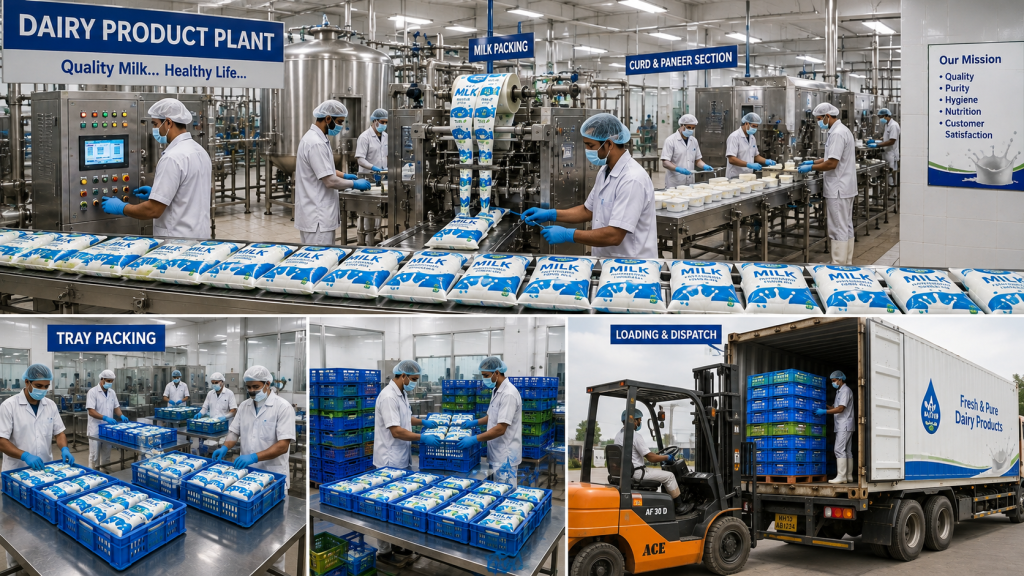
Efficient operations are critical in a dairy plant due to the perishable nature of products. The process begins with collecting raw milk from farmers and transporting it under refrigerated conditions. The milk is then pasteurized to eliminate harmful bacteria and homogenized for uniform consistency. Depending on the product, further processing is done to produce curd, paneer, butter, or cheese. Packaging is done in hygienic conditions using automated machines to ensure safety and shelf life. Hiring skilled staff for production, quality control, and logistics is essential. Maintaining strict hygiene standards and cold storage facilities is crucial to prevent spoilage. Inventory and supply chain management should be optimized to ensure timely delivery and minimal wastage.

Growth Opportunities and Expansion

The dairy industry offers vast growth opportunities. Once your plant is established, you can expand your product line by introducing premium and value-added products such as flavored milk, ice cream, and specialty cheeses. Entering new markets, including rural and international markets, can significantly increase revenue. Collaborating with large retail chains and launching your own distribution network can improve market reach. With increasing demand for healthy products, introducing organic and lactose-free dairy items can attract new customer segments. Over time, your business can evolve into a well-known regional or national dairy brand.

Conclusion

A dairy product plant is a highly reliable and scalable medium-scale business with consistent demand and strong growth potential. With proper planning, quality control, efficient operations, and effective marketing, entrepreneurs can build a successful and sustainable business in this sector. Although it requires significant investment and careful management, the long-term returns and expansion opportunities make it an excellent choice for aspiring business owners.

How to Start The Best Spice Processing Unit?

How to Start a Best Spice Processing Unit? – Complete Business Guide
Introduction to Spice Processing Business

A spice processing unit is one of the most profitable and sustainable medium-scale businesses, especially in a spice-rich country like India, which is known as the largest producer and exporter of spices in the world. Spices such as turmeric, chilli, coriander, cumin, and garam masala are essential ingredients in every Indian kitchen, ensuring constant demand throughout the year. A spice processing business involves cleaning, drying, grinding, blending, packaging, and distributing spices in powdered or whole form. With increasing demand for hygienic, branded, and ready-to-use मसाले, this business offers excellent growth opportunities both in domestic and international markets.

Business Plan and Model

To start a spice processing unit, the first step is to decide your product range. You can focus on single spices like turmeric powder and chilli powder or create blended मसाला products such as garam masala, pav bhaji masala, and kitchen king masala. The next step is sourcing high-quality raw spices directly from farmers or wholesale markets to ensure cost efficiency and quality. The processing unit requires machines like cleaning machines, pulverisers (grinders), dryers, mixing machines, and packaging machines. It is mandatory to obtain licenses from the Food Safety and Standards Authority of India to ensure food safety compliance. You can sell your products under your own brand or supply to retailers and wholesalers. Distribution can be done through local markets, supermarkets, and online platforms like Amazon and Flipkart.

Startup Cost and Investment

The investment required for a medium-scale spice processing unit typically ranges between ₹15 lakh and ₹40 lakh, depending on the scale of production and level of automation. Major expenses include machinery (₹8–₹20 lakh), factory setup or rental, raw material procurement, packaging materials, labour costs, and branding. Additional costs include licensing, electricity setup, and initial marketing. Working capital for at least 3–6 months is necessary to manage production and supply cycles. If you start with limited products and semi-automatic machines, you can reduce the initial investment and scale gradually.

Profit Margin and Revenue Potential

The spice processing business offers attractive profit margins ranging from 25% to 50%, depending on the product and branding. Basic spices like turmeric and chilli powder have moderate margins but high demand, while blended मसाले offer higher profit margins due to value addition. For example, raw turmeric purchased at a lower price can be processed and sold at double the cost after grinding and packaging. With effective branding and distribution, a medium-scale unit can generate monthly revenues between ₹3 lakh to ₹15 lakh or more. As the brand gains recognition, profit margins and sales volume increase significantly.

Target Audience

The target audience for spice products is vast and includes households, restaurants, hotels, catering businesses, and food manufacturers. Urban and semi-urban consumers prefer packaged मसाले due to hygiene and convenience. Additionally, restaurants and food service providers require bulk quantities of spices, making them a valuable B2B segment. Export markets also present a huge opportunity, especially for Indian spices, which are in high demand globally. Niche segments like organic spices and chemical-free products are gaining popularity among health-conscious consumers.

Marketing Strategy

A strong marketing strategy is essential to build a successful spice brand. Start with attractive and hygienic packaging that highlights quality and freshness. Branding should focus on authenticity, purity, and taste. Digital marketing plays a key role—use platforms like Instagram and Facebook to promote your products with engaging content such as cooking videos and recipes. Collaborating with food bloggers and influencers can increase brand awareness. Listing products on e-commerce platforms like Amazon helps reach a wider audience. Offline strategies include distributing free samples, offering discounts, and building relationships with retailers and wholesalers. Participating in food exhibitions and trade fairs can also boost visibility.

Operations and Management

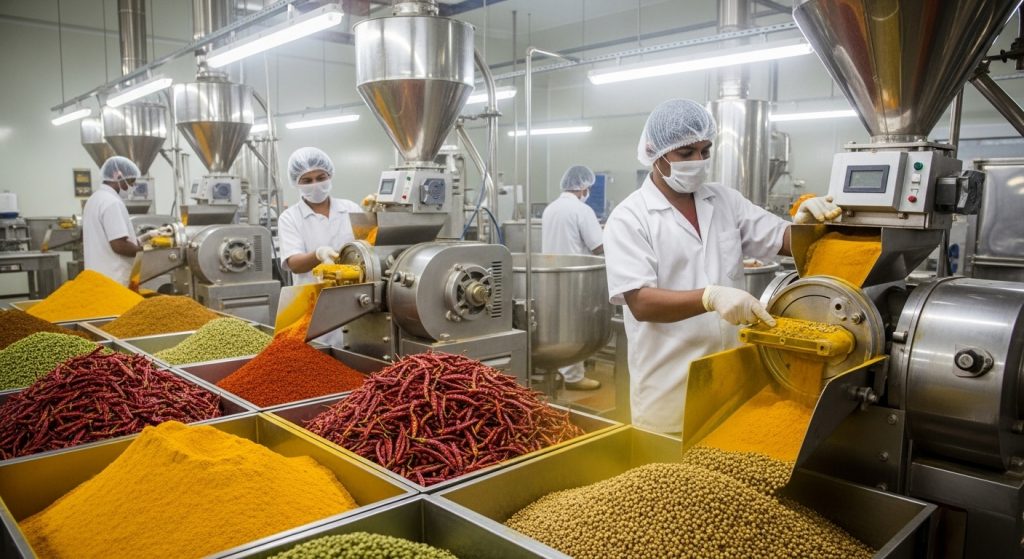
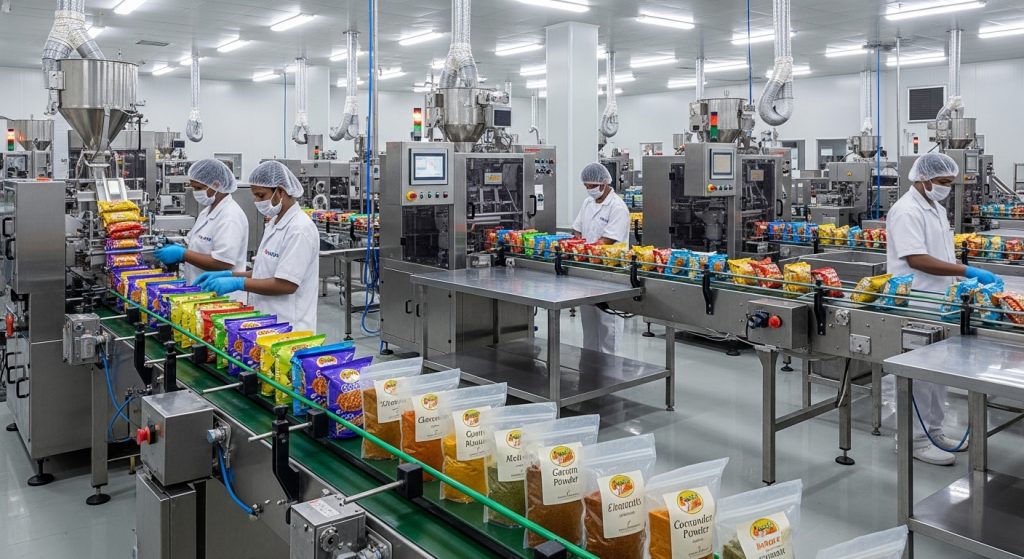
Efficient operations are crucial for maintaining quality and consistency. The process begins with sourcing raw spices, followed by cleaning to remove dust and impurities. The spices are then dried to reduce moisture content and ground into powder using pulverisers. Blending is done for mixed मसाले, ensuring consistency in taste and aroma. The final product is packed using sealing machines in moisture-proof packaging to maintain freshness. Hiring skilled workers for production, quality control, and packaging is essential. Maintaining hygiene standards and proper storage conditions is critical to prevent contamination. Inventory management systems help track stock levels and reduce wastage. Logistics and distribution should be well-organised to ensure timely delivery.

Growth Opportunities and Expansion

The spice processing business offers immense growth potential. Once the brand is established, you can expand your product line by introducing new मसाला blends and premium variants. Entering export markets can significantly increase revenue, especially in countries with a large Indian population. Collaborating with supermarkets and large retail chains can boost distribution. You can also launch your own website for direct sales, increasing profit margins. With rising health awareness, introducing organic and chemical-free spices can attract premium customers. Over time, your business can grow into a recognised national or international spice brand.

Conclusion

A spice processing unit is a highly profitable and scalable medium-scale business with consistent demand and strong growth potential. With proper planning, quality control, effective branding, and smart marketing strategies, entrepreneurs can build a successful business in this sector. Although it requires initial investment and compliance with food safety regulations, the long-term benefits and expansion opportunities make it an excellent business choice for aspiring entrepreneurs.

How to Manufacture The Best Packaged Food?

How To Start a Packaged Food Manufacturing Business? – Complete Guide
Introduction to Packaged Food Manufacturing

Packaged food manufacturing is one of the fastest-growing medium-scale business opportunities, especially in a country like India, where urbanization, busy lifestyles, and increasing demand for convenience foods are driving massive growth. This business involves producing, processing, packaging, and selling ready-to-eat or ready-to-cook food products such as snacks, मसाले (spices), pickles, sauces, instant mixes, bakery items, and health foods. With the rise of supermarkets, e-commerce platforms, and food delivery apps, packaged food has become an essential part of modern living. Starting this business requires proper planning, quality control, branding, and compliance with food safety standards, but it offers long-term scalability and consistent demand.

Business Plan and Model

A successful packaged food manufacturing business starts with selecting a niche. You can focus on categories such as snacks (chips, namkeen), organic food, ready-to-eat meals, frozen foods, or regional specialty products. The next step is creating unique recipes or sourcing standardized formulations that ensure taste consistency and shelf life. You will need to decide whether to manufacture under your own brand or supply to other companies (private labeling). Setting up a small manufacturing unit with essential machinery like mixers, grinders, sealing machines, and packaging units is crucial. Additionally, obtaining a license from the Food Safety and Standards Authority of India is mandatory to ensure food safety compliance. The business model can include both offline retail distribution and online direct-to-consumer sales through platforms like Amazon and Flipkart.

Startup Cost and Investment

The startup cost for a medium-scale packaged food manufacturing business in India typically ranges from ₹10 lakh to ₹50 lakh, depending on the product range, machinery, and production capacity. Major expenses include factory setup or rental, machinery purchase, raw materials, labor, packaging materials, licensing, branding, and marketing. Machinery costs alone can range from ₹5 lakh to ₹20 lakh, depending on the level of automation. Packaging and branding are critical investments, as they directly influence customer perception and sales. Additionally, working capital is needed to manage inventory, logistics, and day-to-day operations for at least 3–6 months.

Profit Margin and Revenue Potential

Packaged food manufacturing offers attractive profit margins ranging from 20% to 40%, depending on the product category and scale of operations. High-margin products include snacks, मसाले, and health foods, while margins on staples may be slightly lower but offer higher-volume sales. For example, a well-branded namkeen or snack product can cost ₹20–₹30 to produce and sell at ₹50–₹80 in the market, ensuring good profitability. As production volume increases and supply chains become efficient, profit margins improve significantly. With proper branding and distribution, monthly revenues can scale from ₹2 lakh to ₹20 lakh or more within a year.

Target Audience

The target audience for packaged food products is broad and includes working professionals, students, families, and health-conscious consumers. Urban and semi-urban populations are the primary customers due to their preference for convenience foods. Additionally, niche audiences such as fitness enthusiasts (protein snacks, organic foods) and children (snacks, chocolates) can be targeted with specialized products. Export markets also present a huge opportunity, especially for Indian traditional food items like pickles, spices, and ready-to-eat meals.

Marketing Strategy

Marketing plays a crucial role in the success of a packaged food business. Start by creating a strong brand identity, including a unique logo, attractive packaging, and a memorable brand name. Digital marketing is essential—use platforms like Instagram and Facebook to showcase your products through high-quality images and videos. Collaborate with food influencers and bloggers to increase brand visibility. Listing products on e-commerce platforms like Amazon can boost online sales, while tie-ups with local retailers, supermarkets, and distributors ensure offline reach. Offering free samples, discounts, and festival promotions can attract initial customers and build brand loyalty.

Operations and Management

Efficient operations are key to maintaining quality and profitability. The manufacturing process involves sourcing raw materials, processing, quality testing, packaging, and distribution. Hiring skilled workers for production, quality control, and packaging is essential. Maintaining hygiene standards and proper storage conditions is critical to ensure product safety and shelf life. Inventory management systems help track raw materials and finished goods, reducing wastage. Logistics and distribution should be streamlined to ensure timely delivery to retailers and customers. As the business grows, investing in automation and ERP systems can improve efficiency and reduce costs.

Growth Opportunities and Expansion

The packaged food industry offers immense growth opportunities. Once your brand gains recognition, you can expand your product line by introducing new variants and flavors. Entering new markets, including rural areas and international exports, can significantly boost revenue. Collaborating with large retail chains and supermarkets can increase distribution reach. Additionally, launching your own website or mobile app for direct sales can improve profit margins. With increasing health awareness, introducing organic, gluten-free, or diet-specific products can open new customer segments. Over time, your business can evolve into a large-scale food brand with national or even global presence.

Conclusion

Packaged food manufacturing is a highly profitable and scalable medium-scale business with strong demand and long-term growth potential. With the right combination of quality products, branding, efficient operations, and smart marketing strategies, entrepreneurs can build a successful and sustainable business in this sector. Although it requires initial investment and regulatory compliance, the returns and expansion opportunities make it a rewarding venture for aspiring business owners.